

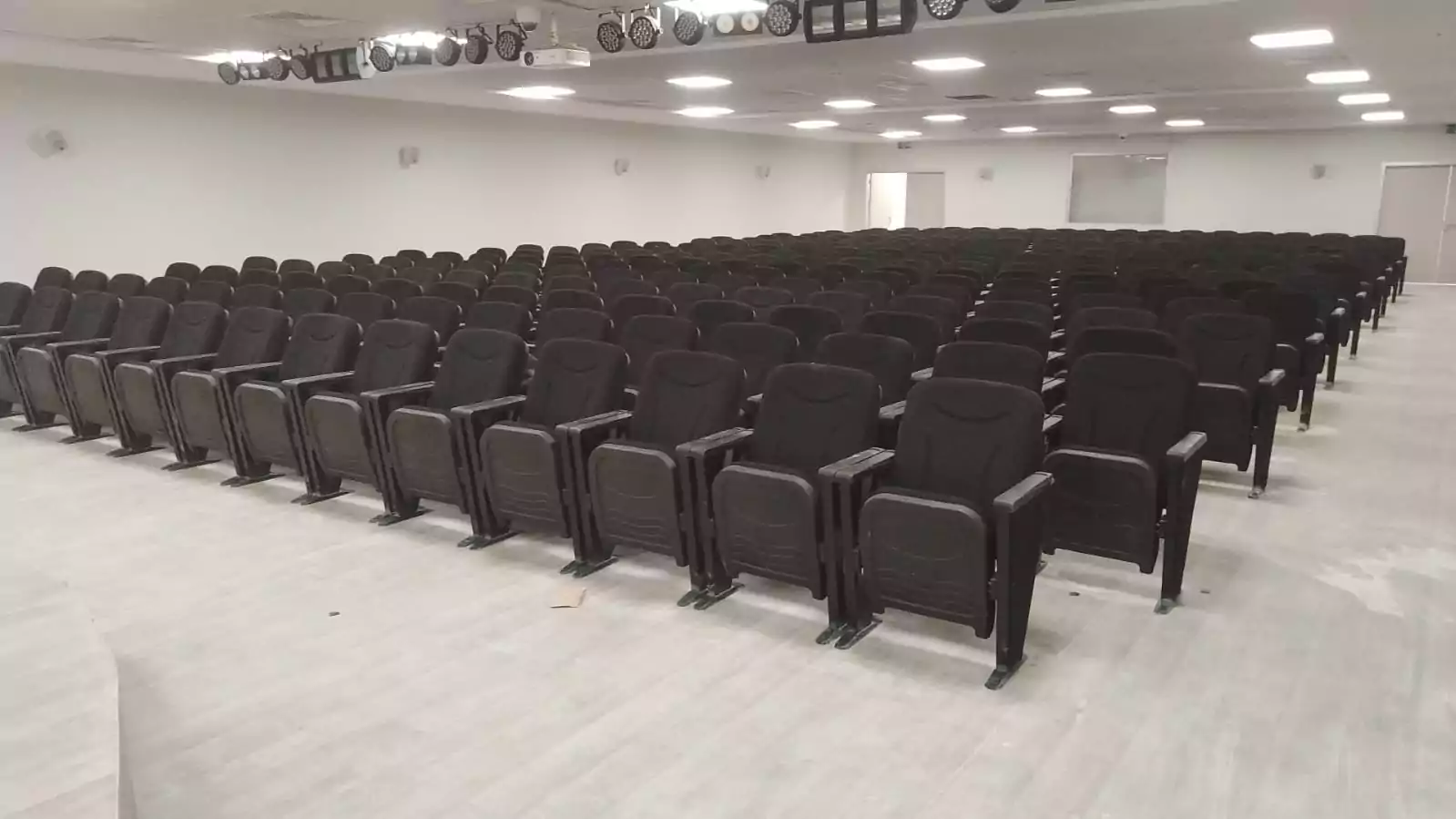
Seating That Defines the Auditorium
An auditorium is built for attention. Whether it hosts lectures, performances, ceremonies, or public gatherings, its primary function is to hold focus in a shared space. Among all architectural and technical elements, seating plays a uniquely constant role. It is the one element that connects every individual in the room to the space itself.
Auditorium seating is not about comfort alone, and it is not about appearance in isolation. It is about balance. Balance between posture and ease, between density and personal space, between permanence and adaptability.
The Auditorium as a Controlled Environment
Unlike casual public spaces, auditoriums operate under controlled conditions. People arrive, sit, remain attentive, and leave together. Seating must support this collective rhythm without drawing attention to itself.
A well considered auditorium seat allows the body to settle quickly. Once seated, the audience member should not need to negotiate with the chair. There should be no constant adjustment, no shifting to find balance. The seat becomes stable, predictable, and quietly supportive.
This stability is what allows the auditorium to function as a focused environment rather than a restless one.
Posture and Attention Are Directly Linked
In auditoriums, posture influences attention more than in almost any other seating environment. When the body is unsupported or forced into an unnatural position, concentration breaks down long before the event ends.
Effective auditorium seating supports an upright posture without rigidity. The backrest guides rather than forces, the seat depth accommodates different body types without encouraging slouching. Comfort is present, but it does not dominate awareness.
The goal is not relaxation. The goal is sustained presence.
Seating and the Geometry of the Room
Auditorium seating defines how the room is read visually and functionally. Rows establish rhythm. Spacing determines openness or compression. Alignment directs the eye forward.
When seating geometry is handled carefully, the room feels ordered before any event begins. People intuitively understand where to go, how to sit, and how to remain oriented toward the focal point of the space.
Poorly planned seating, on the other hand, creates visual noise and subtle discomfort that accumulates over time.
Acoustic Sensitivity of Auditorium Seats
Sound behaves differently in auditoriums than in many other venues. Spoken word, music, and ambient sound all interact closely with the audience. Seating must support this acoustic environment rather than interfere with it.
Auditorium seats are expected to remain silent during use. No movement noise, no vibration, no unexpected sounds when people shift or stand. Materials and construction must avoid reflecting or absorbing sound inconsistently.
When seating respects acoustics, the room sounds the same whether it is full or partially occupied, which is critical for rehearsals and live events alike.
Durability Without Visual Heaviness
Auditorium seating is often installed for decades of use. It must endure repetition without appearing heavy or outdated. Durability should be embedded in the structure, not announced through bulky forms.
Seats that age well do so quietly. They maintain alignment, remain stable, and preserve their visual order even after years of continuous use. This kind of durability protects the integrity of the auditorium as a whole.
Adapting to Different Uses Over Time
Most auditoriums evolve. A space designed for lectures may later host performances, conferences, or hybrid events. Seating must be flexible enough to support these changes without requiring constant intervention.
This adaptability comes from proportion and layout rather than mechanical complexity. When seating is designed with foresight, it continues to serve new purposes naturally.
The room remains relevant because the seating does not limit how it can be used.
The Visual Role of Seating
Auditorium seating occupies a large portion of the interior view, yet it should never become the visual focus. Its role is to frame the experience, not compete with it.
Well designed seating creates calm repetition. The eye moves across rows without interruption. The stage, podium, or screen remains dominant. This visual restraint supports the seriousness and clarity associated with auditorium spaces.
Operation, Maintenance, and Everyday Reality
Beyond the event itself, auditorium seating affects daily operations. Cleaning, inspection, and upkeep are ongoing realities that must be considered from the beginning.
Seats that are easy to maintain reduce downtime and preserve the appearance of the space. When maintenance is straightforward, the auditorium remains consistently presentable, not just during major events.
Good seating design acknowledges this everyday reality without compromising the experience.
When Seating Disappears Into the Space
The most successful auditorium seating is rarely discussed. Audiences remember the speaker, the performance, or the message, not the chair. Their bodies remain supported, their attention uninterrupted.
This disappearance is intentional. It means the seating has done its job by becoming part of the space rather than an object within it.
Holding Attention, Not Stealing It
Auditorium seating exists to hold attention, not to claim it. Through balanced posture support, visual order, acoustic sensitivity, and long term reliability, it allows the space to function as intended.
When seating is shaped by real use, careful planning, and respect for the auditorium’s purpose, it becomes a silent partner in every event. It does not speak, but without it, nothing else would be heard as clearly.
Created By : Monseat